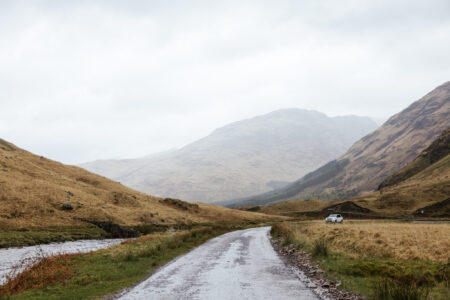
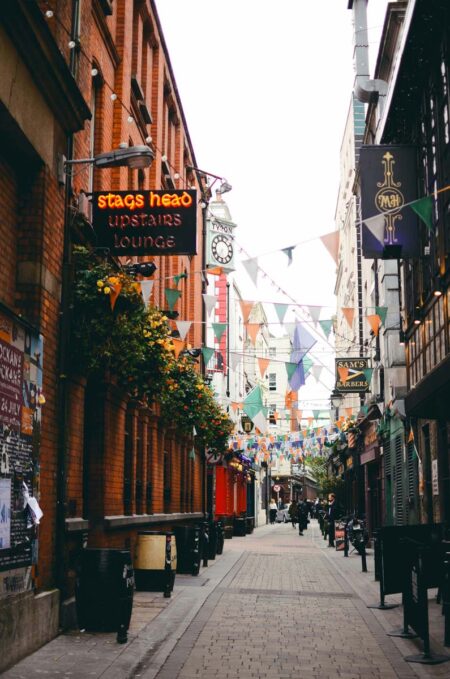
Planning a road trip in Ireland? An excellent choice! There’s no better way to experience the country’s rolling green hills, ancient ruins, dramatic coastal cliffs, and welcoming village pubs than from behind the wheel on a personalised self-drive tour. Ireland calls to those seeking an authentic connection with wild landscapes and rich heritage. Comparable in size to South Carolina or Maine, this compact island nation offers remarkable diversity, making it perfectly suited to exploration by car.
why driving in ireland creates lasting memories
Driving in Ireland gives you the freedom to discover the island on your own terms.From ancient stone circles to windswept coastal cliffs and centuries-old pubs, unforgettable sights await along the route
Experience Ireland beyond the reach of tour buses. Pull over when a castle ruin catches your eye, linger longer in a local café where conversations flow as freely as the tea or follow an inviting, unmarked lane to a hidden beach.
The best part? Ireland’s compact size means you’re never far from something extraordinary.
irish driving laws made simple
Driving in Ireland is straightforward once you understand the local rules and requirements.
speed limits and road rules
Speed limits in the Republic of Ireland are posted in kilometres per hour. Here’s what you’ll encounter:
| Road Type | Speed Limit | Notes |
| Motorways | 120 km/h (75 mph) | Multi-lane highways |
| National Roads | 100 km/h (62 mph) | Main routes between towns |
| Regional Roads | 80 km/h (50 mph) | Smaller connecting roads |
| Built-up Areas | 50 km/h (31 mph) | Towns and villages |
Essential rules to remember:
- Drive on the left side of the road
- Yield to traffic from the right at roundabouts
- Mobile phone use is illegal unless hands-free, but this is still discouraged.
- Keep headlights on during poor visibility
- Ireland has strict drink driving laws. The legal drinking and driving limit in Ireland is 0.05% BAC (blood alcohol content) or 50mg of alcohol per 100ml of blood.
- Seatbelts are mandatory for all passengers, there is a fine of €120 acceptable minimum for not wearing seatbelts
- Children under 150cm (4’9” tall) and weighing less than 36kg (approximately 80lbs) must use an approved child safety seat.
Good to know: Ireland Driving Etiquette:
Every country has its own etiquette or unwritten rules, and Ireland is no exception. Here are a few handy tips that will be appreciated by the locals and will help you avoid misunderstandings.
- Flashing headlights: used quite often, also to say thank you or to indicate another driver to go ahead – especially at passing places on narrow roads.
- The raised hand: A small hand or finger raised from the steering wheel is a simple way to say thanks when someone lets you pass. Use it – you’ll feel like a local in no time.
- The locals know the roads and will usually drive faster than visitors. They are often going to work. Don’t feel pressured to match their speed and let them pass where safe to do so.
- On the single track lanes, always note where the passing places are – you may need to reverse back to one.
Good to know before you go
Road signs use international symbols, and speed limits are in kilometres per hour. You might also see signs in Irish (Gaelic), especially in some of the more rural counties like Connemara, Donegal or Mayo or but don’t worry, the directions are usually clear.
If you are not used to them, roundabouts may feel a little puzzling at first. With these simple tips, you’ll soon be navigating them like a local.
- Give way to traffic coming from the right.
- Enter by turning left and keep moving clockwise.
- Signal your exit just like a regular turn.
Parking in towns can be tricky. Look out for Pay and Display machines – you usually pay at a nearby kiosk, machine or via a mobile app and will need to display your ticket on the dashboard. Don’t park on yellow lines, driveways, and footpaths (sidewalks), or your wallet might have a fine when you return!
Fuel (petrol/diesel) is sold on litres
Top tips
Don’t forget the mantra: – Keep left and look right when pulling out into traffic.
When you are on the motorway (highway) the slow lane is the left lane, passing happens in the right lane
what to expect: irish roads
Unlike the modern highways, Ireland’s rural lanes wind between weathered stone walls with sheep often outnumbering cars.
types of roads
- Motorways (M roads): Connect major cities with multi-lane efficiency. Some motorways will have tolls.
- National roads (N roads): Key routes linking major regions and towns. They can be dual or single carriage way.
- Regional roads (R roads): Often photogenic , these connect smaller towns and villages. Can be narrow and winding.
- Local roads (L roads) Link small towns and villages. Delightfully scenic but often narrow and single track with passing places. Take your time and pull over for oncoming cars when needed. They can vary widely in condition.
tolls you’ll encounter
Several Irish roads require toll payments. Most toll plazas accept both cash and card payments.
The M50 motorway around Dublin uses barrier-free tolling. You can pay before 8 pm the following day online or at Payzone outlets. Other motorways (M1, M3, M4, M7, M8) have traditional toll plazas where you stop and pay.
things to consider on irish roads
Livestock: Sheep and cattle cross roads in rural areas. If you meet a farmer moving livestock, stop and wait. Rural Ireland operates on a different clock. Embrace it.
Tractors and farm equipment: Agricultural vehicles move slowly on narrow roads. Overtake only when you have clear visibility ahead. of you
Narrow roads: Many country roads barely fit two cars. The driver closest to a passing place typically reverses to the passing place. A friendly wave acknowledges the courtesy.Weather: Irish weather changes quickly. Morning sunshine gives way to afternoon rain. Mist rolls off mountains and reduces visibility. Drive to conditions, not posted limits.
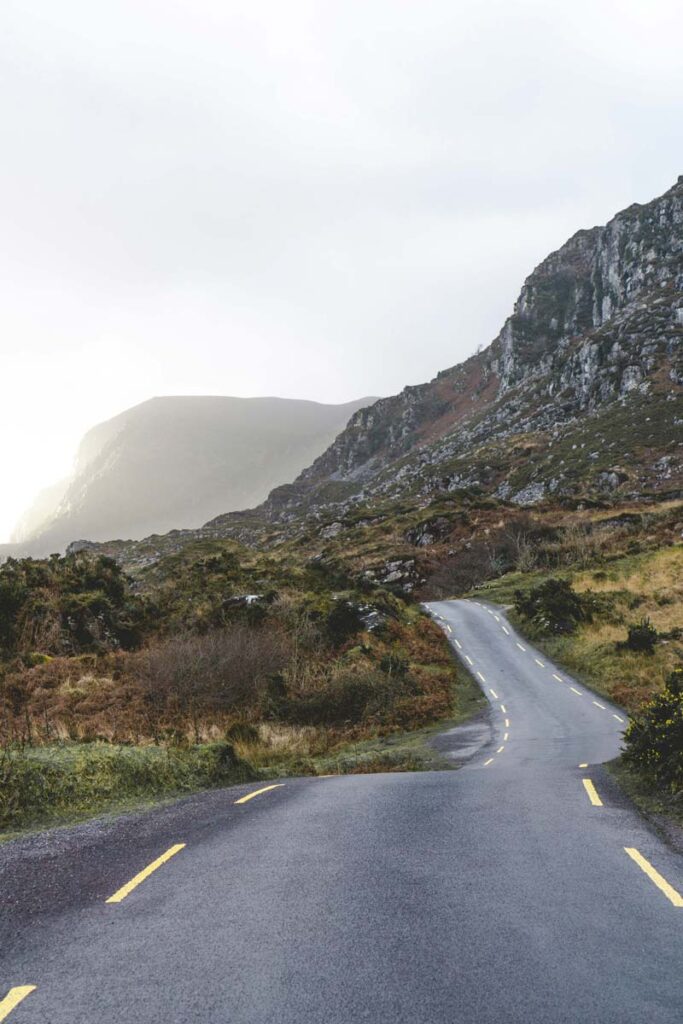
must-see routes you can’t miss
Here are just a few of our favourite drives in Ireland:
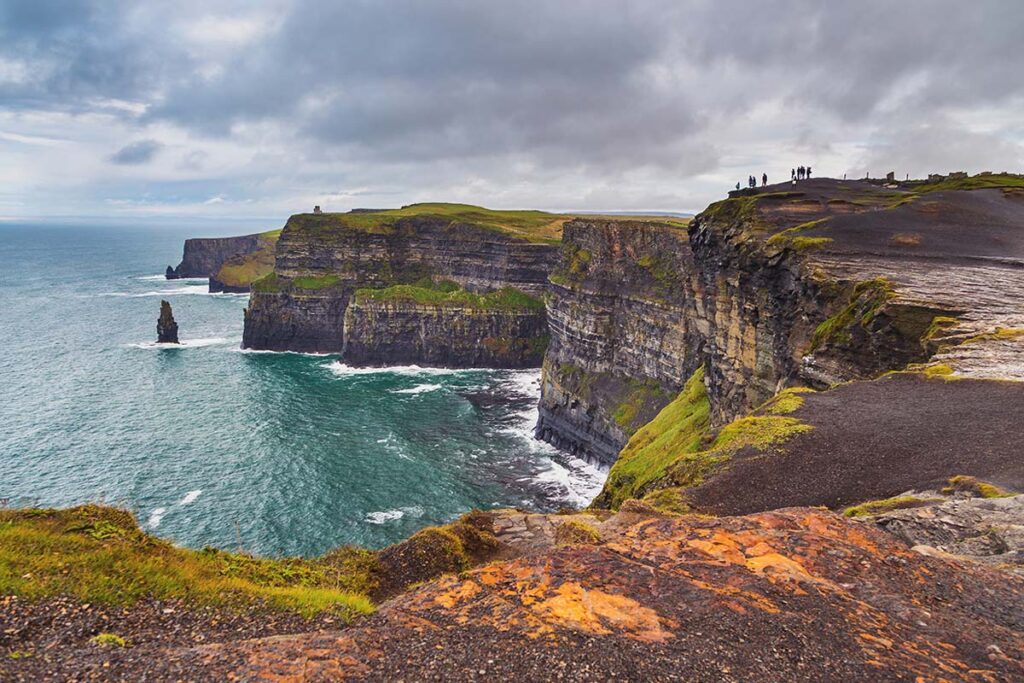
The Wild Atlantic Way is one of the world’s great coastal drives, stretching along Ireland’s western edge from Malin Head in Donegal in the north to the pretty coastal town of Kinsale in County Cork on the south coast. It winds its way through ever-changing seascapes, rugged headlands with towering cliffs, remote beaches and lively coastal towns. It offers a front-row seat to the raw beauty of the Atlantic coast.
Among its many highlights, a few sections stand out as our favourites are:…..
Ring of Kerry: This 179-kilometre loop circles the Iveragh Peninsula. Stop at Ladies View where Victorian royalty once paused to admire Killarney’s lakes.
The 22 mile Slea head Drive starting and finishing in the buzzing coastal town of Dingle, is possibly one of Ireland’s most iconic coastal routes. Famed for its dramatic views of the Atlantic, rugged cliffs, and timeless villages. The thin sinew of road clings to the cliff edge, winding past stone walls, ancient forts, and hidden coves, making every turn a breathtaking experience. Top tip – Must be driven clockwise!
A drive around the north western outpost Achill Island of County Mayo takes some beating. The scenery, beaches and villages are just breath-taking. Highlights include the windswept sands of Keel Beach, the rugged cliffs of Slievemore, the picturesque Doo Lough Valley and the striking desert-like landscape at Minaun Cliffs.
Causeway Coastal Route: Journey along the Coastal Causeway Route: that links Belfast with the friendly city of Derry and discover some of the most beautiful and varied scenery in Northern Ireland. This road was not built until the mid 1800’s, snaking its way along the narrow strip of coastline between sea and the cliffs, it is now one of Europe’s top road journeys. Visit the whitewashed fishing village of Cushenden for excellent seafood, seek out Game of Thrones’ spectacular settings and don’t miss the breathtaking panoramic cliff top views from the Torr Head.
driving in ireland: dos and don’ts
Do:
- Give yourself more time than GPS suggests
- Pull over to let faster drivers pass on narrow roads
- Explore beyond the main routes where Ireland’s magic hides
- Refuel when you see stations, especially before remote areas
Don’t:
- Rely solely on GPS (paper maps provide essential context)
- Underestimate driving time on winding roads
- Forget that locals give directions using landmarks, not road numbers
- Let your phone dominate the experience
making the most of your irish adventure
Ireland deserves more than a hurried drive-through. Pack your itinerary with possibilities, but remain flexible. The weather might redirect you. A local might recommend a traditional music session. The best memories often come from unplanned moments.
Your Irish adventure can easily extend to Scotland’s highlands,England’s National Parks, orWales’ dramatic coastline. Celtic Routes curates experiences across all these destinations, perfectly planned so you can simply enjoy the journey.
final thoughts
Driving in Ireland offers freedom to explore at your own pace. Ancient landscapes, warm hospitality, and roads that reward curiosity await. Whether navigating narrow country lanes or cruising coastal routes, the experience connects you with Ireland’s spirit.
If you’re looking for a stress-free solution, please connect with our team. We curate itineraries and select the perfect vehicle from our fleet. You focus on the experience while we handle the details.
frequently asked questions
Do I need an International Driving Permit? It depends on where your license was issued. If it’s from the EU, UK, US, Canada, Australia, or New Zealand, you don’t need an IDP. If your license isn’t in English or from one of these countries, you’ll need an IDP alongside your original license.
Which side of the road does Ireland drive on? Traffic travels on the left. You’ll sit on the right side of the vehicle and yield to traffic from the right at roundabouts.
Are Irish roads difficult to navigate? Main roads are straightforward. Rural lanes require attention due to narrow widths. Take your time, especially when adjusting to driving on the left side. Within a day or two, it becomes natural.
Do I need a car in Dublin? No. It is best not to have a car in Dublin. It is a compact and very walkable city with almost all major tourist sights near to the centre. Taxis, Uber and public transport options are widely available.
Resources for Planning Your Journey
- Road Safety Authority Ireland – Official rules and regulations
- Met Éireann – Irish weather forecasts
- Celtic Routes Ireland Tours – Curated self-drive tours